

Paediatric Neurology Team visit Fiji Isles April/May 2026
The visit began this time in Labasa, Vanua Levu, on the last day of April. There were accommodation challenges due to the Fiji Primary Schools Netball Tournament, but a major compensation when inquisitive and joyful members of the Kadavu, Tailevu and Suva teams brought Birthday Cake, and beautiful singing voices, to Janis and Dr Rob while we were waiting for transport.
We enjoyed a busy day in clinic on the Friday with nurse Priya and Drs Akansha, Ingrid and Miri. We saw four children with Epilepsy in clinic and then, with Dr Hinal, a PICU child with presumed Acute Necrotising Encephalopathy (ANE) – now still improving with steroids. This is a rare condition with uncertain outcome.
An education/video session reprised our most popular talk on Seizures and Epilepsy at Dr Miri’s request. Good attendance and very searching questions from the attentive junior staff!!
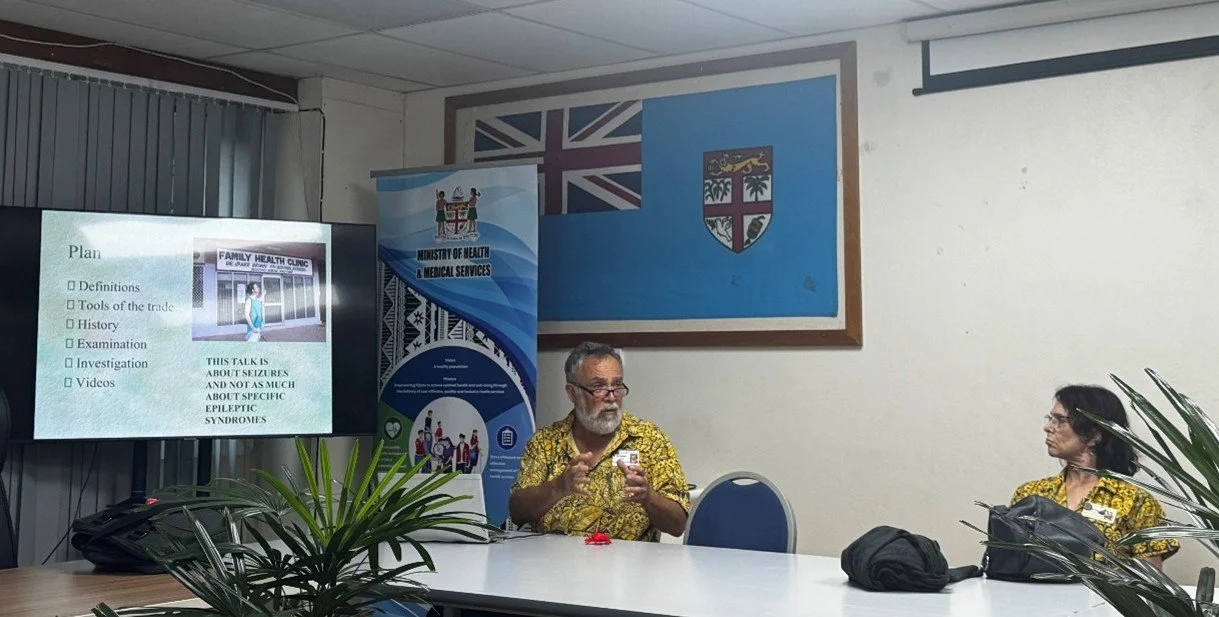
The seizure talk in Labasa
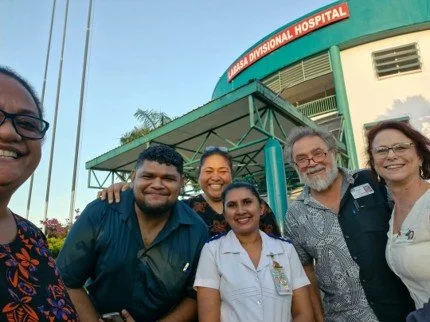
This photo is from 2025 because we did not take one of the team on our recent trip.
Dr Miri, Dr Robert (now in Suva), Dr Evelyn, Nurse Priya, Dr Rob and Nurse Janis
(missing: Drs Akansha and Ingrid)
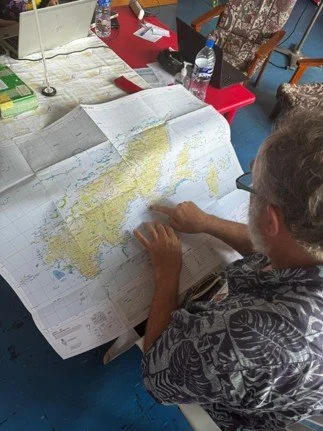
On to Viti Levu…..
Dr Rob trying to find Suva on his map of Vanua Levu !!
In Suva/Commonwealth War Memorial Hospital (CWM) we were joined for the week by two young Australian Paediatric Neurology colleagues nearing completion of training : Dr Halla Malik (Melbourne) and Dr Vanessa Ng (Sydney). Sunday afternoon was spent searching out smart kalavata for the team…….
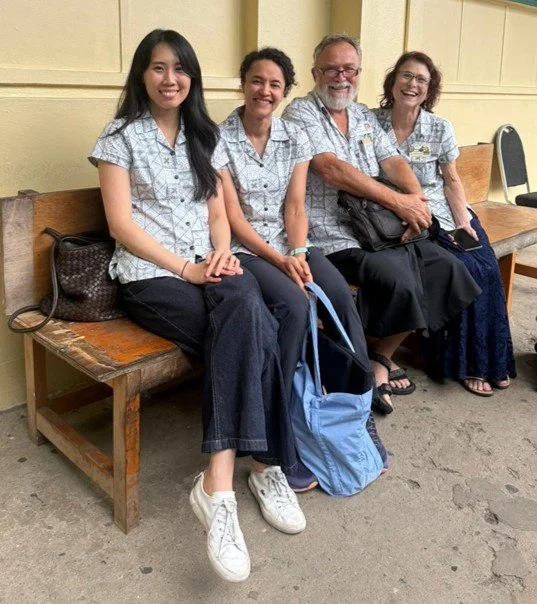
Dr Vanessa, Dr Halla, Dr Rob, Nurse Janis
The CWM clinics were supervised by Nurse Alex and Drs Filipe and Robert. Given the bigger team there was much more opportunity to teach the presenting registrars. Our two millennial touch typing experts gave Janis a well-earned rest from the laptop. Expect meticulous reports, Suva!
Sixth year medical students joined us at different times….Shifana, Vika, Mohammed, Meripa and Rosita. Their curiosity and enthusiasm was both inspiring and energizing (especially for our two older clinicians!).
As usual we saw many children with Epilepsy and Cerebral Palsy; three children with sequelae from different patterns of intracranial bleeding and, on the last clinic day, two children with clinical diagnoses of Duchenne Muscular Dystrophy, a life-limiting condition for which there is still no cure - even with such intensive worldwide research. All of us were deeply moved by the discussions with those two families, working tirelessly to make each day count for their boys. This, despite the relentless grief and helplessness that surrounds this diagnosis. Social inclusion/school attendance also remains a major challenge for children with such disabilities.
We had two sessions reporting EEG and typically productive discussions with adult Neurologist Dr Shrish Acharya (and his visiting colleague Dr Balaji Kalband). There is a wonderful vision for comprehensive Epilepsy care in Fiji and the Pacific - and now major advocacy for the introduction of Lamotrigine into the national formulary. This is a desirable second line drug in many childhood Epilepsies and the first choice for women during pregnancy.
Dr Halla brought much appreciated EEG hardware from her generous department in Melbourne (despite thorough interrogation from Fiji customs on arrival).
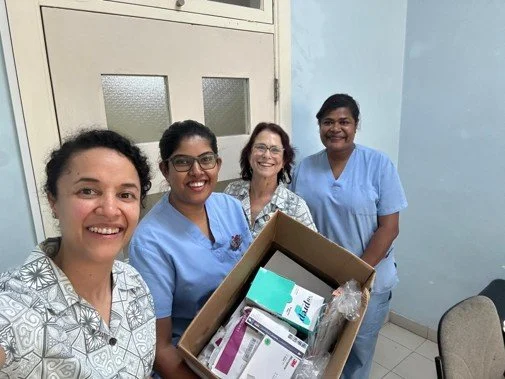
Dr Halla, EEG Nurse Divya, Epilepsy Nurse Janis, EEG Nurse Amelia
After a gracious welcome and introduction by Dr Laila, we participated in a half-day Paediatric Neurology symposium on Thursday. There were updates from Drs Vanessa and Halla on Seizures, Epilepsy, Anti Seizure Medications (ASMs) and Cerebral Palsy respectively. Janis’s famous Seizure Mimics talk returned by popular demand and Dr Rob spoke on Mechanisms of Brain Injury. This was also live-streamed. We had time for talanoa and lunch and of course lots of informal questions later in the day. Feedback has (so far) been very positive but we welcome any suggestions for improvement.
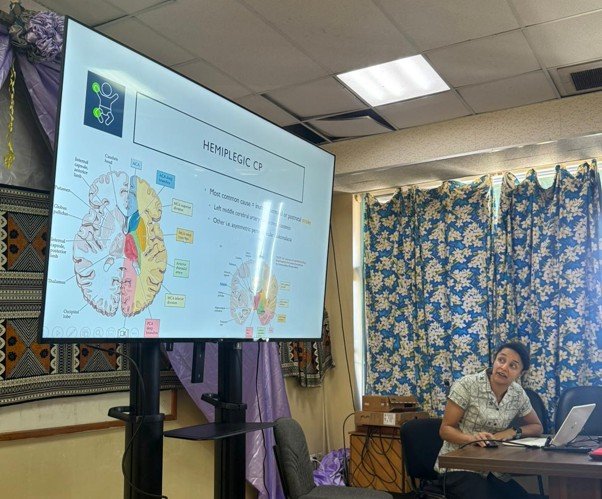
Dr Halla and Cerebral Palsy
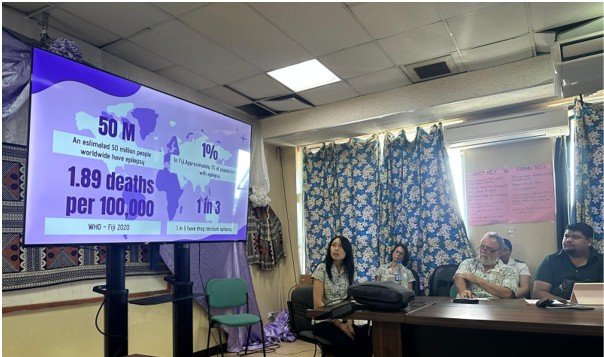
Dr Vanessa and Epilepsy
Drs Halla and Vanessa returned to Australia, having both delighted in a busy and also wonderfully hospitable week, full of new experiences.
Janis and Dr Rob travelled to Lautoka Aspen on the Sunday….this was a busy week!
Again we saw mostly children with Epilepsy and Cerebral Palsy, some with associated complex disability.
We started one child on the high dose steroid protocol for Infantile Spasms. At present we only safely consider this for urban families close to essential hospital supervision given the higher risks and the inevitable side effects over the five weeks of treatment. In other settings we may first recommend Valproate, Diazepam and sometimes Phenobarbital.
We prescribed Phenobarbital for two children with the extreme irritability sometimes seen in some types of Cerebral Palsy. This can be very effective for both the child and the exhausted family. It is always important to exclude other causes such as reflux and painful constipation.
We met one young girl with Psychogenic Non-Epileptic Seizures (PNES). Both history and mobile phone videos gave the answer after a typically confusing course over the previous year. Diagnosis and management remains a challenge worldwide.
We also saw twins with what we believe to be a Paroxysmal Dyskinesia. This diagnosis belongs to a group of very rare conditions which can often mimic Epilepsy but produce brief periods of movement disorder in response to triggers like movement, illness and anxiety. They usually have a genetic aetiology. Prophylaxis can be very effective. Diagnosis is frequently elusive.
Thanks to Drs George and Kiti, our wonderful colleagues, who tried hard to keep us (well, mostly Dr Rob, actually) on schedule.
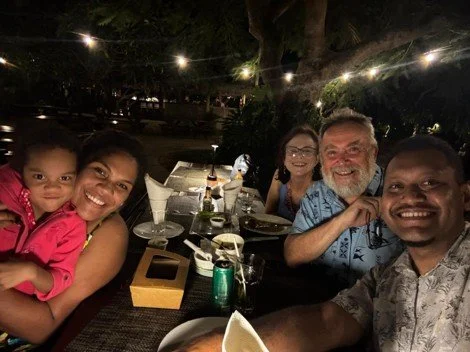
Happy smiles after a week of hard work in Lautoka. Dr Kiti (and cheeky extra), Nurse Janis, Dr Rob, Dr (and renowned Michelin-starred chef) George
As always the major strengths we see in the Pacific include the support given by extended family during illness, resilience and more acceptance of some aspects of illness than we see in Australia. We meet high quality nurses and doctors and some very impressive students. There is an eagerness for constant development of skills and resources. All this despite very heavy workloads.
We thought about three areas for improvement. Please understand that we discuss this frequently with Australian colleagues as well.
More thorough history taking in childhood paroxysmal disorders (semiology) both Epileptic and Non Epileptic. The history of presenting complaint may give you a precise diagnosis in a few minutes. Phone videos are helpful and can be diagnostic, but need to be placed in careful context.
Rational, practical, economical and individualised use of Anti Seizure Medications.
Worldwide, prescribing may be sometimes approached as if “one size fits all”. This may fail to acknowledge realities like access, storage, parental education, additional costs (travel to pharmacy, nearest health centre or even Divisional Hospitals for some compounded items), the right medication, dose and schedule for each unique child and the vital subsequent individualised drug manipulations. These are essential principles everywhere but critically important in countries with a limited variety of medications.
A rational approach applies to both prescribers and pharmacies. It dramatically improves medication compliance/adherence.
This might sound like hard work in busy clinics but becomes second nature if practised frequently.
We see that paediatric outreach clinics for the West of Viti Levu have been deferred during discussions between Aspen and the Department of Health. We recognise that the subsequent need for additional travel places extra logistic and financial burden on families living in those communities. We met several families/children who had been significantly compromised by this change. Hopefully a solution is around the corner.
We hope to return soon - and as you see are working on succession too.
Thank you Fiji as always! We still regularly feel as if we learn more than we teach.
As we have said before, visiting you is a joy and privilege which we never take for granted.
Lolomas
Janis, Rob, Halla and Vanessa
